
Elementor Hosting vs. WordPress Hosting: Which Is Better?
Elementor Hosting vs. WordPress Hosting: Which One Will Actually Keep Your Site Online?
It was 2:00 AM. My client’s screen had just flickered into that dreaded, blank white void. You know the one. The White Screen of Death. My phone was blowing up with frantic texts. My coffee was cold. That is when I realized that a beautiful design means absolutely nothing if your hosting provider cannot keep the lights on. WordPress powers over 40% of the internet, yet people still treat hosting like an afterthought. They hunt for the cheapest price, only to pay the real cost in lost sales and late-night panic attacks.
The Reality of Choosing Your Foundation
Talking Points:
* The connection between server architecture and uptime.
* Why cheap hosting is rarely cheap in the long run.
* Initial setup versus ongoing maintenance requirements.
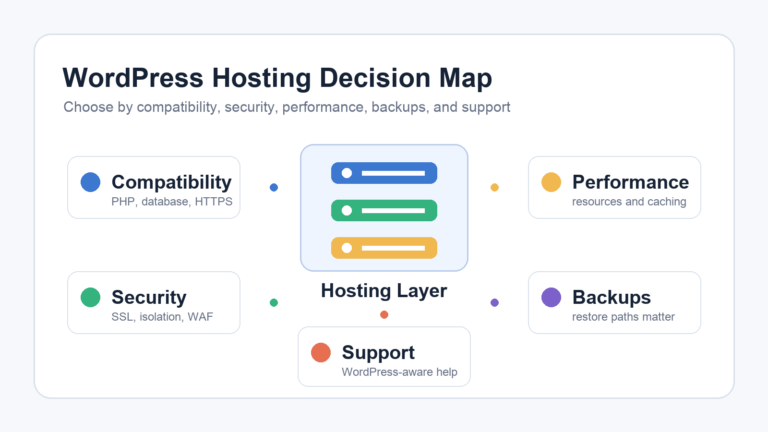
When you pick a host, you are choosing the soil for your digital garden. If the soil is bad, the best design work will still wither. People often confuse a site builder with the actual house the site lives in. This is where the debate over elementor hosting vs wordpress hosting gets messy. You might think you are getting a deal with shared hosting plans that start at $1.99, but those cheap rates usually triple when it comes time to renew. You pay for the limitations with slower performance and constant headaches.
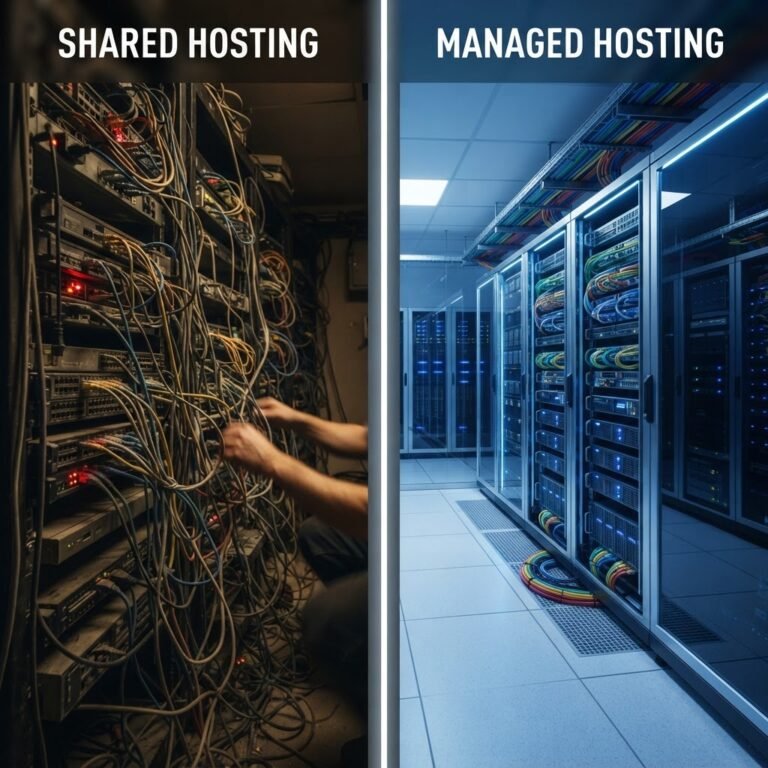
I have seen thousands of sites crumble under the weight of a simple traffic spike because the server architecture could not handle it. Shared hosting is basically a noisy neighbor situation. Your site is stuffed onto a server with hundreds of others. If their site gets a rush of traffic, your site chokes. It is not an infrastructure failure on your part, but your visitors will blame you when they see a 504 error instead of your homepage. Do not let your site’s health depend on someone else’s plugin choices.
Understanding Elementor Hosting as an Integrated Solution
Talking Points:
* How bundling the builder and server impacts compatibility.
* The benefits of Google Cloud infrastructure for speed.
* Why simplicity saves you from technical support tickets.
Elementor hosting changes the game by bundling everything into a neat little package. You get the hosting environment, the server resources, and the premium builder in one bill. It sits on the Google Cloud Platform, which is a massive upgrade from those budget shared servers. When the builder and the environment are built to talk to each other, you see fewer weird errors when you try to save a page. It is a smarter way to manage your stack.
I used to spend hours debugging plugin conflicts on standard setups. It was exhausting. With an integrated solution, the server is tuned specifically for the code running on it. You get better page load speed because the caching mechanisms are already dialed in. You stop guessing which settings to change and start actually building. It is refreshing to have a system that just works without needing a computer science degree to configure.
The Performance Showdown: Managed WordPress Hosting
Talking Points:
* Comparing shared versus managed wordpress hosting features.
* Server resource allocation and speed benchmarks.
* The value of automated backups and staging environments.
Managed wordpress hosting is a different beast entirely. Providers like Kinsta or WP Engine handle the heavy lifting of server optimization for you. They do the database optimization and keep your core files updated. You pay a premium, usually starting around $25-$35 per month, but you gain a partner in site stability. When your site is your business, you cannot afford to waste time on server-side maintenance.
Think about the Time to First Byte. A solid VPS setup can hit under 300 milliseconds consistently. Shared hosting? You might be waiting over a second just for the server to say hello. That lag kills conversions. People hit the back button if your site feels sluggish. Managed hosts provide staging environments where you can break things safely before you go live. That is a luxury that becomes a necessity once you stop tinkering and start selling.
Flexibility vs. Convenience: Finding Your Balance
Talking Points:
* Trade-offs between root access and automated ease.
* Why some users need VPS power over managed ease.
* Matching your hosting choice to your technical skill level.
Sometimes you need raw power. If you are building a custom web application or need specific server-side configurations, shared plans and even many managed hosts will limit you. VPS hosting offers that sweet freedom. You get root access. You get isolated, guaranteed resources. You are the captain of the ship. But with great power comes the requirement to actually know how to steer.
If you have never touched a command line, a VPS will be your worst nightmare. You have to handle your own security, your own updates, and your own firewalls. If you mess up a configuration, you are the one responsible for the fix. Most people just want their site to show up when someone types the URL. For those people, the convenience of a managed or integrated environment is worth every penny of the extra cost.
The Hidden Support Gap
Talking Points:
* Differences in support accessibility and expertise.
* Why ‘ticket-only’ support can cost you hours of downtime.
* Measuring the cost of human expertise against monthly fees.
Support is the hidden variable in every hosting plan. When your site goes down, do you want to talk to a bot or a person who actually knows WordPress? Many budget hosts use Tier 1 support techs who just read from a script. They don’t know why your site is timing out. They just tell you to clear your cache. It is infuriating.
When you pay for high-quality managed hosting, you get people who live and breathe the platform. They can look at your error logs and tell you exactly which script is throwing a tantrum. They fix things before they become crises. Sometimes they even handle your site migration tools so you don’t have to break your site moving files. High-level support is not an expense; it is insurance for your sanity.
Decision Matrix: How to Choose Your Path
Talking Points:
* Evaluating your specific site goals and traffic levels.
* When to upgrade from a basic starter plan.
* Finalizing your hosting strategy for long-term growth.
Are you a freelancer just starting out? Go with a platform that handles the basics. If you are running an e-commerce store with high traffic, move to a managed environment. Do not try to save ten dollars a month if it costs you two sales a day. It is simple math. Every site has a lifecycle. Your needs today will be different from your needs in a year.
Take a look at your traffic stats. Are you hitting a ceiling? If your site takes forever to render during peak hours, your hosting is the bottleneck. It is time to upgrade. You want a setup that can grow with you. I have seen clients move from shared hosting to managed environments and instantly see their bounce rate drop. That is the proof you need. It is not just about keeping the site online; it is about keeping it fast enough to be useful.
Fixing What Hosting Cannot
Talking Points:
* Identifying when performance issues stem from code, not servers.
* Scaling your site through better optimization practices.
* Why hosting is only one part of the success equation.
Even the best host cannot fix bad code. You can have the most expensive server on the planet, but if you have a bloated theme and forty-five unnecessary plugins, your site will still crawl. Hosting is just the foundation. You still need to do your part. Optimize your images. Use a good caching plugin if your host doesn’t provide it. Keep your database clean. These are the daily habits of a successful site owner.
I spend a lot of time cleaning up sites that have been neglected. It is usually a combination of poor hosting and total lack of maintenance. When you treat your site like a living thing, it rewards you with speed and stability. If you just launch it and hope for the best, you are asking for trouble. Do the work on your end, and pick a host that does the work on theirs.
Closing the Gap on Your Digital Future
Choosing the right hosting environment is the most important technical decision you will make. It defines whether you spend your time being a business owner or a frustrated systems administrator. Whether you go with a dedicated elementor cloud website or a top-tier managed WordPress host, ensure you are getting real support and solid infrastructure. Do not let yourself become another victim of the white screen.
Take stock of where your site is today and where you want it to be next year. If you have been struggling with speed or uptime, make the switch. Your visitors will thank you, and your sleep schedule will definitely improve. Have you had a nightmare experience with a cheap host? Did you find a fix that changed everything for your traffic numbers? Share your experience in the comments below—I want to hear what worked for you.
Frequently Asked Questions
* Question: Does moving to a managed host actually make my site faster?
Answer: Yes, because managed hosts are tuned for WordPress specifically. They handle caching and database optimization at the server level, which is much more efficient than using plugins to do the same tasks.
* Question: Is the Elementor Pro license included in all Elementor hosting plans?
Answer: Yes, Elementor hosting plans typically bundle the Pro license, which helps reduce cost and simplifies the integration between the builder and your server environment.
* Question: When should I upgrade from shared hosting to a VPS?
Answer: You should look at a VPS when your traffic exceeds what shared hosting can handle or when you require custom software installations that shared environments restrict for security reasons.
* Question: How do I know if my hosting is the cause of my site’s slowness?
Answer: Use a tool like PageSpeed Insights or Pingdom to check your TTFB. If your server response time is consistently high before your content even starts loading, the server architecture is likely the bottleneck.
* Question: Can I migrate my site if I change my mind about my host?
Answer: Most reputable managed hosting providers offer free migration services to move your site from your old host, reducing the risk of downtime during the transition.