Beginner WordPress Tutorials: Ultimate Video Guide for Sites
WordPress for Beginners: The Ultimate Video Tutorial Guide to Building Your Site
Talking Points:
* The massive influence of WordPress on the internet.
* Dispelling myths about site creation difficulty.
* Why choosing the right platform matters for long-term growth.
I still remember my first site crash. It was 2 AM, the screen was completely white, and I had absolutely no idea what went wrong. WordPress powers 41.9% of all websites globally as of May 2026. That is a massive slice of the internet pie. If you feel like you are standing at the base of a mountain looking up at a build project, breathe. You are in the right place.
Building a site used to require a degree in computer science. Now, it just requires a little patience and the right beginner wordpress tutorials video to guide your hand. Forget the horror stories about coding requirements. This software is a full-featured content management system capable of handling everything from simple journals to enterprise shops.
Understanding the Basics: What is WordPress and Why Use It?
Talking Points:
* Defining WordPress as a CMS.
* Distinguishing between WordPress.org and WordPress.com.
* The importance of ownership versus rented space.
Think of a content management system as the engine under the hood of your vehicle. It keeps everything moving without you needing to know how the pistons fire. WordPress holds a 59.5% share of the CMS market for good reason. It is flexible, reliable, and entirely yours if you install it on your own hosting.
People often confuse the two versions of the platform. WordPress.org is the software you download to own and control. WordPress.com is a hosted service where someone else manages the servers. Always go for the self-hosted route. It keeps your data safe and gives you total freedom to grow.
When you own your site, you avoid arbitrary rules. You pick your domain name, your host, and your rules. It is your patch of digital dirt. Treat it well, and it will serve you for years.
Phase 1: Getting Started – Domain, Hosting, and Installation
Talking Points:
* How a domain name acts as a home address.
* Matching your hosting to your site traffic.
* Using one-click installs to save time.
A domain name is your permanent address. Make it short, memorable, and professional. Once you have that, you need a house to store your furniture. That is where web hosting configuration comes in. It provides the server space where your files live.
I learned the hard way that cheap hosting often means a slow site. Don’t skimp on the foundation. Look for providers that offer one-click WordPress installation. It turns a thirty-minute chore into a three-minute breeze.
Connecting your domain to your host involves pointing DNS settings. It sounds scary, but it is just like telling the internet where your house is located. Once that is done, you are ready to log in and start the fun part.
Phase 2: Navigating the Dashboard – Your Command Center
Talking Points:
* Understanding the main navigation menu.
* Where to find your posts and pages.
* Setting up your user profile for efficiency.
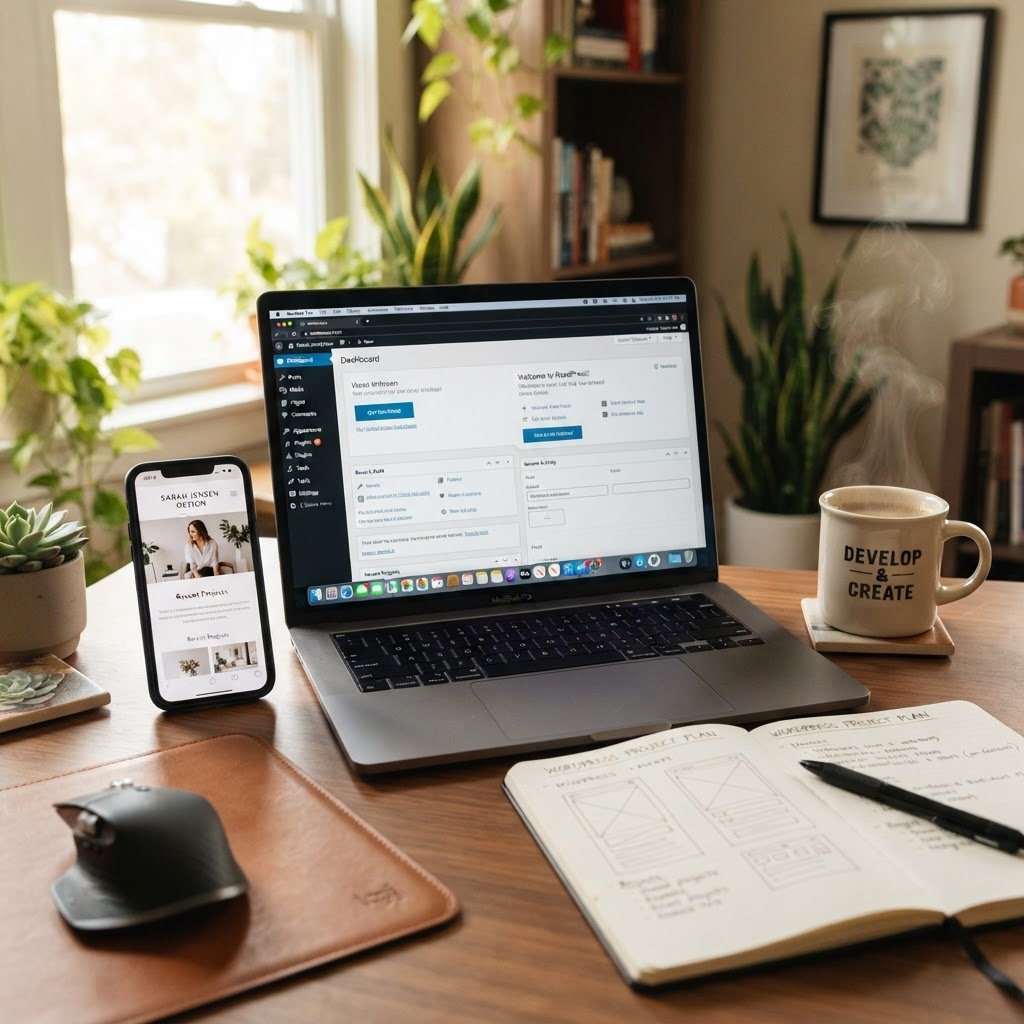
When you log in, you see the dashboard. It might look like a messy cockpit at first glance. Relax. This is your command center for WordPress mastery. You spend 90% of your time in just three or four areas. Focus on the Posts, Pages, and Appearance tabs.
Think of the dashboard as your digital workshop. The left-hand sidebar is your toolkit. Keep your media library management clean by organizing files early. A cluttered library is a nightmare six months down the road.
Don’t let the sheer number of settings intimidate you. You don’t need to touch everything on day one. Explore the user profile section to set your display name correctly. It builds trust when readers see a real human name on your content.
Phase 3: Setting Up Your Site for Success
Talking Points:
* Choosing a clean URL structure with permalinks.
* Setting your site title and tagline.
* Managing user roles for security.
Before you write a single word, check your permalinks and settings. Go to Settings > Permalinks and select ‘Post Name’. It makes your site look professional and helps with search visibility. Avoid the default settings that look like random gibberish.
Your site title and tagline should be clear. They tell people exactly what you offer. If you are building a store, verify your settings to match your regional currency and timezone. Little details prevent major headaches later.
Check your site security essentials too. Never use ‘admin’ as your username. It is the first thing hackers try when they attack a site. Use a complex password and change it once a quarter. Small steps prevent big disasters.
Phase 4: Designing Your Site – Themes and the Block Editor
Talking Points:
* The role of themes in visual design.
* Getting comfortable with the WordPress block editor.
* Avoiding theme bloat for better performance.
The block editor changed everything. It allows you to drag and drop elements without touching a line of code. Start simple. You can always get fancier as you learn more about your style.
Theme customization is where your brand comes alive. Pick a theme that is fast and lightweight. If it comes with fifty extra features you don’t need, find a different one. Complexity is the enemy of speed.
Use consistent colors and fonts. Your site is a reflection of you, but it needs to remain readable. If your visitors can’t read your text, they will leave in three seconds. Keep it clean.
Phase 5: Expanding Functionality – The Power of Plugins
Talking Points:
* What plugins actually do for your site.
* The danger of installing too many tools.
* Selecting reputable sources for add-ons.
Plugins are like apps for your site. They extend your functionality without requiring custom coding. The directory has more than 60,000 free options. It is tempting to grab everything that looks cool.
Don’t do it. Every plugin adds a tiny bit of weight to your server. More weight means slower load times. Keep it to the essentials like security, SEO, and contact forms.
Always check reviews and update dates. If a plugin hasn’t been updated in two years, run away. Outdated code is a giant open door for security threats. Use only what you need and delete what you don’t.
Phase 6: Essential Maintenance – Keeping Your Site Fast and Secure
Talking Points:
* The importance of regular software updates.
* Backing up your site before changes.
* Why performance optimization is an ongoing task.
Maintenance is not optional. It is the price of admission for a healthy site. Outdated plugins are the leading cause of security vulnerabilities. Update them weekly to keep your site sealed tight.
I once spent an entire Saturday fixing a site that went dark because of an old update. Don’t be me. Always run a full backup before you update core files. If something breaks, you can restore your site in minutes.
Use a caching plugin for website performance optimization. It creates a static version of your site that loads lightning fast. Your users will thank you, and so will search engines.
Troubleshooting 101: How to Handle Common Glitches
Talking Points:
* Staying calm when the white screen hits.
* Identifying plugin conflicts.
* Knowing when to call in an expert.
Glitch happens. It doesn’t mean your site is ruined. If the screen goes white, usually a bad plugin is the culprit. Deactivate your plugins one by one until the site returns.
Most problems are just configuration errors. Keep a notebook of changes you make. If you break something, you can retrace your steps to fix it. If you are truly stuck, search forums or reach out to your host support.
Sometimes, you just need an expert eye. Don’t be afraid to ask for help. We have all been exactly where you are today. That is how you learn.
Conclusion: From Beginner to Pro – Your Next Steps
Your site is a work in progress. It won’t be perfect on day one, and that is fine. The best sites are the ones that evolve with their owners. Take these lessons, apply them to your specific needs, and don’t stop building.
Share your progress in the comments below. Let me know what you are building or if you ran into a specific hurdle. Your experience helps others realize they are not alone in this process. Let’s keep growing.
Frequently Asked Questions
Do I need to learn HTML or CSS to build a great WordPress site?
Not at all. The block editor handles the visual heavy lifting. You can build a professional site entirely without writing a single line of code.
Can I switch my theme after I have already added content?
You can, but it is often better to pick a theme you like early on. Switching can sometimes shift your images or fonts, requiring a bit of extra cleanup work.
Why does my site load slowly despite having great hosting?
Most often, the issue is too many plugins or unoptimized images. Check your site speed, delete unused plugins, and compress your images before uploading them.
How often should I check for WordPress updates?
Check at least once a week. Keeping your core, themes, and plugins current is the absolute best way to keep your site secure from common threats.
Is WordPress really suitable for an online store?
Absolutely. With tools like WooCommerce, which powers roughly 33% of all eCommerce stores, the platform is excellent for selling products, services, or subscriptions.