
Automating Off-Site WordPress Backups: A Guide to Plugin-Free Security
Stop Relying on Plugins: How to Automate Off-Site WordPress Backups Like a Pro
I remember waking up at 2 a.m. to a screen that was completely white. No login, no dashboard, just the dreaded White Screen of Death staring back at me. My site was toast, and my backup plugin had failed to run for three weeks. I spent the next six hours manually rescuing data. Since that night, I swore off bloated, unreliable backup plugins for good.
The Plugin Trap: Why Third-Party Backups Fail
Talking Points:
* Application-layer backup plugins tax your server CPU.
* Plugin failures often go unnoticed until a disaster occurs.
* You pay premium prices for features you can automate for free.
Most people think installing a backup plugin solves their data safety needs. It rarely works out that way. These tools live inside your WordPress environment, meaning they consume valuable memory every time they trigger. If your server is already struggling, a backup task can push it right over the edge. You end up with a slow site and a corrupted archive file that will not restore when you need it most.
I have seen too many owners pay $99 a year for these tools only to find out they saved nothing. The software crashes right along with the site. When your database hangs, the plugin stops dead in its tracks. You need a solution that sits outside the application layer to keep your data safe.
Moving to Server-Side, Decoupled Strategies
Talking Points:
* Decoupling backups from WordPress keeps your site lean.
* Server-side scripting provides total control over backup frequency.
* Off-site storage ensures you follow the 3-2-1 backup rule.
Professional site management means moving your safety net off the server. If your host has a fire or a hard drive failure, your local backups go up in flames, too. You must follow the 3-2-1 rule: one live copy, one local archive, and one off-site destination. This keeps you protected regardless of what happens to the primary hosting account.
Automating off-site WordPress backups is not as hard as it sounds. You just need access to your terminal. Once you stop relying on plugins, your performance spikes because your server isn’t bogged down by background tasks. It is just clean, fast code doing its job exactly when you tell it to.
Prerequisites for Total Backup Mastery
Talking Points:
* Root or SSH access is required for command line control.
* You need a remote storage bucket like S3 or B2.
* Basic familiarity with Linux bash scripting helps.
Before you start, make sure you have SSH access to your server. Without it, you are locked out of the real power. You also need a secure remote destination. Amazon S3 or Backblaze B2 work perfectly for this. These storage buckets are cheap and virtually impossible to fill up.
Do not worry if you have never used a command prompt before. I will break it down into simple steps. Once you get the hang of it, you will never want to go back to a sluggish plugin menu again.
Step 1: Executing a Clean Database Dump
Talking Points:
* Use WP-CLI to export your database accurately.
* Database dumps must be separate from site files.
* Automation ensures you never miss a daily save.
WordPress is just files and a database. You cannot have one without the other. To automate database backups, we use WP-CLI. It is the most reliable tool in the box. A simple command like `wp db export` saves your entire site content into a clean SQL file instantly.
Run this command as part of a script so it happens on a schedule. You want a fresh dump every single day. If your site breaks, you can import that SQL file in seconds. It is much cleaner than relying on a heavy third-party tool.
Step 2: Efficient File System Archiving
Talking Points:
* Use tar to compress large file structures.
* Rsync handles syncing files without manual intervention.
* File integrity remains intact during the compression process.
Next, you need to grab the files. I prefer using `tar` to bundle everything into a single archive. It is fast and handles permissions perfectly. Just target your WordPress root folder and let it run.
If your site is massive, use `rsync`. This tool only copies what changed since the last run. It saves bandwidth and makes your automated off-site WordPress backups lightning-fast. You get a perfect copy without taxing your server’s processor for hours.
Step 3: Automating the Process with CRON
Talking Points:
* CRON jobs handle scheduling without human input.
* Set your backup frequency to match site activity.
* Server-side automation runs even if your site goes offline.
Now we put it on autopilot. A CRON job is just a task list for your server. You tell it to run your scripts every night at 3 a.m. when traffic is low. It does not matter if your WordPress site is down; the server is still running the script.
I set mine to run once daily. If your site is an e-commerce beast with orders every minute, run it every four hours. It is your call. That is the beauty of taking control.
Step 4: Securely Transferring Archives
Talking Points:
* Transfer archives to secure cloud buckets immediately.
* Encryption keeps your site data safe during transit.
* Delete old local archives to keep storage free.
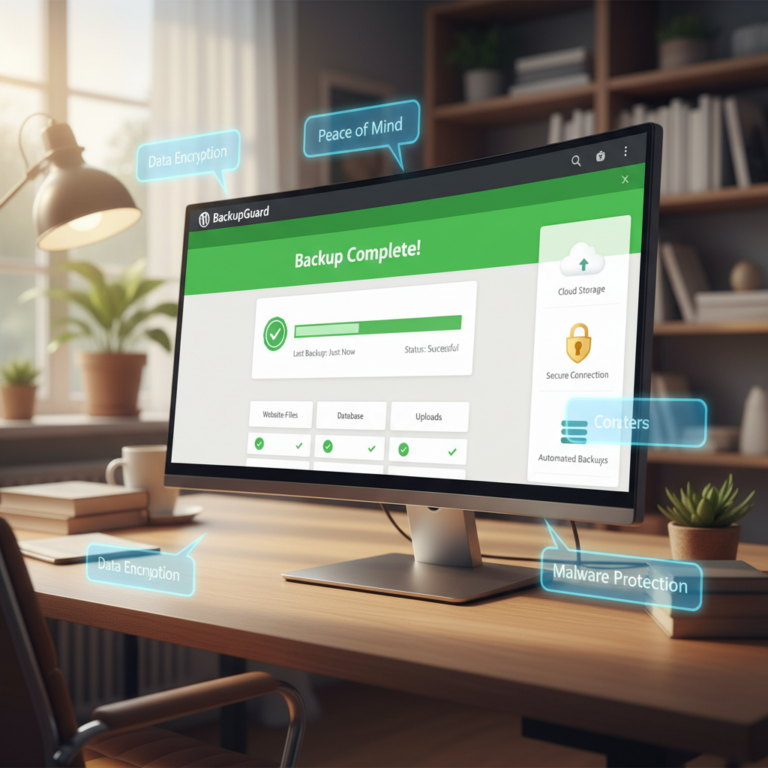
Once the archive is created, move it off the server. I push mine directly to a cloud bucket using command-line tools. This is a secure WordPress backup method because your data leaves the site the moment it is saved. Even if a hacker deletes your server files, your off-site copy is untouchable.
Set a retention policy to delete local copies older than a week. You do not need to keep months of data on your hosting account. Keep the site lean and clean.
Verification: Testing Before Disaster Strikes
Talking Points:
* A backup is useless if it does not restore.
* Test your database dumps on a local staging site.
* Verify file integrity by checking folder contents.
Never assume a backup works just because the script finished. I test my recovery process once a month. Download your latest archive and try to restore it on a separate machine. If it works, you can sleep soundly.
Most people skip this step and pay the price. Don’t be that person. A few minutes of testing now saves you days of stress later.
When to Call for Help
Talking Points:
* Complex server setups may need expert eyes.
* WPSite Deck specializes in high-performance site fixes.
* Avoid permanent data loss by getting pro guidance early.
Sometimes, things get tricky. If you have a custom server setup or strange permissions, you might hit a wall. Do not risk your site’s health by guessing. I have spent 20 years fixing these issues. Reach out if the command line starts throwing errors you don’t recognize.
We love helping users move away from plugin-bloat. Whether you need help with WP-CLI configurations or just want a second opinion on your storage strategy, we have every fix. Your site deserves to be fast, secure, and bulletproof.
Conclusion: A Leaner, Faster Future
Taking charge of your backups makes you a better site owner. You stop relying on code you don’t control and start owning your own infrastructure. Your site will run faster without plugin overhead, and you will rest easier knowing your data is stored securely off-site.
Start small. Try running a manual database export today using the commands I showed you. Once you see how fast and clean it is, you will never go back to plugins. Share your thoughts or any struggles you had in the comments below!
Frequently Asked Questions
1. Question: Is it really better to use terminal commands than a plugin?
Answer: Yes, because terminal commands run directly on the server level without using WordPress resources, preventing site slowdowns and avoiding common plugin conflicts.
2. Question: What happens if I make a mistake in my CRON job?
Answer: If you make a mistake, the job simply fails to run. You can check your server logs to identify the error, adjust the script, and try again without damaging your live site.
3. Question: Can I use this method if I have shared hosting?
Answer: Some shared hosting plans restrict SSH access. Check with your host first, or consider a move to a plan that offers full terminal control to gain real power over your site.
4. Question: How long should I keep my off-site backups?
Answer: Keeping 30 days of daily backups is standard for most sites. If your business is data-heavy, consider a longer retention policy to ensure you can recover from long-term issues.
5. Question: Do I need to be a developer to follow these steps?
Answer: Not at all. Basic command-line usage is a learned skill. If you can copy and paste commands into a terminal, you are already halfway to mastering your own site management.