Supreme Court Rulings on Abortion, Immunity, and Voting Rights
Understanding the Supreme Court’s Rulings on Abortion, Presidential Immunity, and Voting Rights
When the news broke about the Supreme Court overturning Roe v. Wade, I remember feeling a mix of disbelief and urgency. How could something so foundational be reversed? The decisions made in that courtroom ripple through our lives, affecting fundamental rights. It’s essential to comprehend these judicial choices and their impact on society. Let’s explore these recent Supreme Court rulings which shape our constitutional landscape.
Abortion Rights: From Roe v. Wade to Dobbs v. Jackson Women’s Health Organization
Abortion rights have been at the forefront of American civil liberties for decades. It all started in 1973 with Roe v. Wade, which established a woman’s right to choose to terminate her pregnancy. This landmark ruling set a standard that maintained some degree of federal protection for abortion rights. Fast forward to 2022, the Supreme Court delivered a shocking blow by overturning Roe in Dobbs v. Jackson Women’s Health Organization, stating that states could now regulate or even outlaw abortion entirely.
The implications of this ruling are profound. While some states rushed to strengthen their abortion restrictions, others moved to safeguard access. Interestingly, after the decision, support for abortion rights reportedly increased in the public realm. A 2023 study revealed that many Americans began advocating more fiercely for their beliefs in light of the judicial shift.
Presidential Immunity: The Evolution of Executive Privilege
Presidential immunity is another critical area where the Supreme Court has made waves. The idea that a sitting president could have certain protections was underlined in several landmark cases, from Nixon’s Watergate scandal to more contemporary issues. The concept aims to ensure that presidents can perform their duties without constant legal distractions.
However, as we’ve seen with ongoing investigations and legal challenges, debates about how far this immunity extends are hurdles that current administrations must navigate. Can the president be held accountable for misdeeds while in office? The balance of power is always shifting, reminding us that under the surface, democracy is a constant struggle.
Voting Rights: Key Supreme Court Decisions and Their Implications
Voting rights have been a pivotal issue, and recent Supreme Court decisions reflect changing attitudes and political climates. Cases like Shelby County v. Holder in 2013 drastically altered the landscape by invalidating key provisions of the Voting Rights Act of 1965.
This rollback has lead to widespread concerns about voter suppression, particularly affecting minority communities. The Court’s tendency to uphold restrictive laws in some jurisdictions poses genuine threats to equitable voting access. However, public outcry is a powerful tool; keeping the conversation alive is essential for maintaining voter rights.
Comparative Analysis: How These Rulings Intersect and Diverge
The intersection of these rulings shows a complex relationship between individual rights and governmental power. For instance, how does restricting abortion rights influence voter turnout? When states outlaw certain choices, they often ignite political movements that can alter the electoral landscape.
Presidential decisions can also have ramifications for policies impacting voting rights or health care access. Understanding these connections can provide insights into future elections and societal shifts. It’s an intricate web of influence that encourages continuous examination.
Public Response and Societal Impact of Recent Decisions
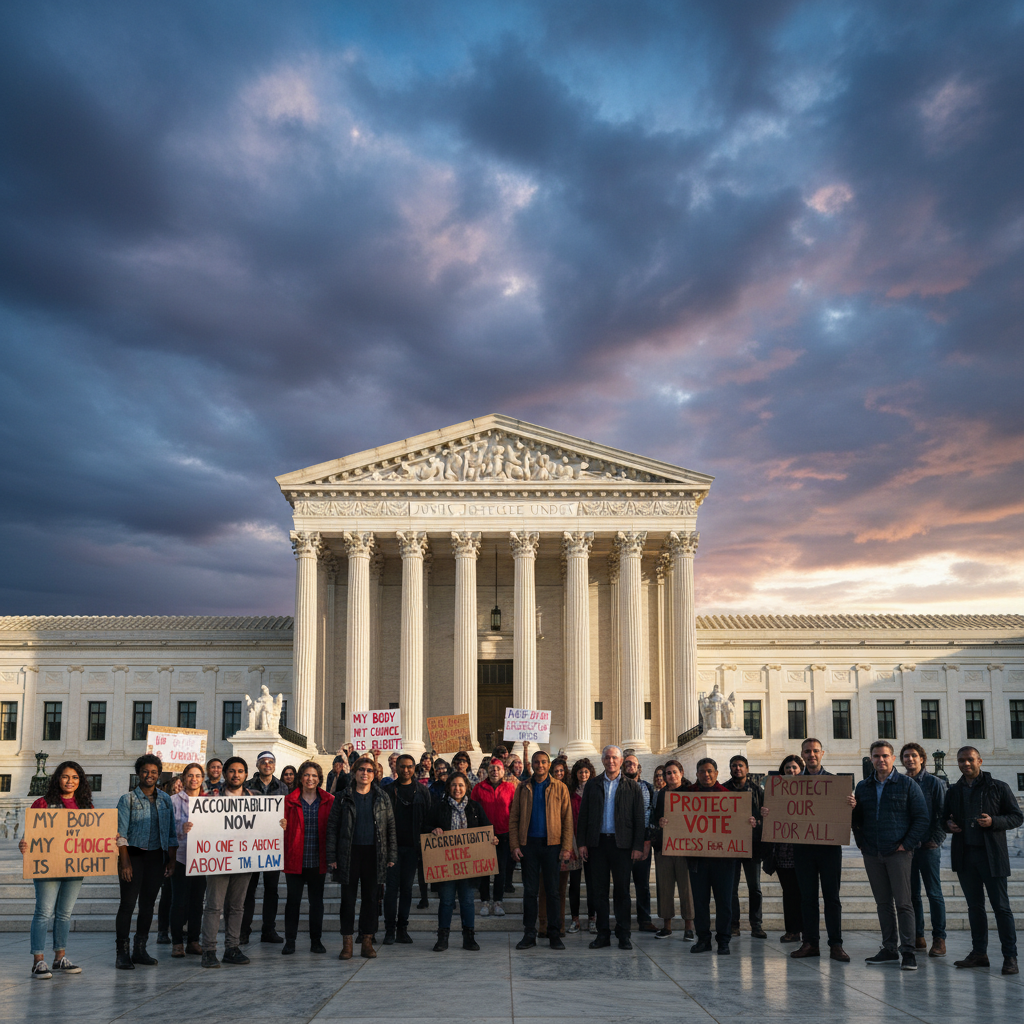
After each Supreme Court decision, I’ve noticed a rise in activism and public discourse. Whether it’s social media movements or organized protests, people have mobilized around issues of abortion rights, voting access, and executive accountability. The rulings have energized the electorate, leading many individuals, including myself, to participate more actively in the political process.
The power of collective voices is undeniable; with grassroots movements flourishing, it’s essential to keep the dialogue alive. We’re witnessing a pivotal moment in American democracy where participation equals power.
Legal and Political Reactions: A Nationwide Perspective
The political spectrum across states is unmistakably polarized concerning these rulings. Some states respond by reinforcing existing protections, while others seek to impose stricter rules. The contrasting legislation paints a vivid picture of America’s divided stance on fundamental rights.
It’s important for us to be aware of what’s happening in our localities. The gradual shifts in state law can lead to significant changes over time, particularly in how individuals experience their Constitutional rights.
Future Outlook: Potential Legal Challenges and Legislative Responses
As we look ahead, I can’t help but wonder where this will all lead. Will there be more Supreme Court challenges? Could states band together to create more uniform legislation reflecting public sentiment? The dynamic nature of these issues suggests an ongoing conversation well into the future.
The judiciary isn’t an isolated entity; public opinion, advocacy, and legislative initiatives can shift the terrain. It’s up to us, the citizens, to remain engaged and ensure our voices are heard.
Conclusion: Navigating the Complex Landscape of Constitutional Rights
These recent Supreme Court rulings shape our understanding of what rights we maintain as citizens. Abortion, presidential immunity, and voting rights represent fundamental aspects of our democratic society and deserve our attention and action.
Whatever stance you take, don’t shy away from voicing your opinions, getting involved, and educating others. Change is possible, and history shows that engaged citizens can make a difference. Please share your thoughts and experiences in the comments below!
Frequently Asked Questions
Q1: What was the impact of the Dobbs decision on abortion rights in America?
A1: The Dobbs decision effectively overturned Roe v. Wade, ending federal protections for abortion rights and allowing states to regulate or prohibit the procedure. This has led to varied responses across states, with some imposing restrictions while others strengthen protections for abortion.
Q2: How has public opinion shifted regarding abortion since the Supreme Court’s decisions?
A2: Interest in abortion rights has grown since the Dobbs decision, with studies indicating that public support for legal abortion has increased, reflecting a divergence from the Court’s decisions and broader societal trends.
Q3: Can a sitting president be held accountable for actions taken while in office?
A3: While presidential immunity provides some protections, ongoing legal debates continue to explore the limits of this immunity. Recent cases may challenge the extent to which a president can be held accountable.
Q4: What recent Supreme Court decisions have affected voting rights?
A4: Key decisions, particularly Shelby County v. Holder, have led to significant changes in voting rights, often making it easier for states to impose restrictions that impact voter access, especially for minority communities.
Q5: How can citizens engage with their government regarding these issues?
A5: Citizens can engage by voting, participating in advocacy groups, attending town halls, and influencing local legislation to ensure their voices are heard in matters concerning abortion rights, voting access, and executive accountability.