WordPress Tutorial for Beginners PDF: Master Your Site Easily
WordPress Tutorial for Beginners PDF: Your Ultimate Guide to Mastering Your Site
Talking Points:
- WordPress powers over 41.5% of all websites globally.
- Why the platform remains the industry standard.
- The flexibility of the self-hosted model.
I remember staring at my monitor at 2am, sweat beading on my forehead, as my site vanished behind a blank screen. It felt like my digital home had been demolished overnight. That terrifying moment taught me more about the web than any expensive college course ever could. You are not alone in this frustration. Today, more than 63 million websites rely on this software to function. That popularity means you have access to a massive community when things go sideways.
Choosing the right tools for your business is a big deal. Most people get lost in the weeds before they even start. You do not need to be a developer to get this done. Let me show you how to build a wordpress website that stays upright and runs fast. We keep things simple here. No fluff, just results.
The 2am Reality: Managing WordPress Without the Panic
Talking Points:
- Why technical issues are part of the learning process.
- Keeping your cool during a site crash.
- How to move from fear to confidence.
That sinking feeling when your admin panel refuses to load is real. I have spent two decades fixing broken sites, and I promise you, almost every error has a fix. Panicking usually makes things worse. You need to breathe and look at the screen logically. Most problems happen because of a bad update or a hidden conflict between software components.
I once spent three hours hunting for a fix only to realize I had simply misspelled a line in my config file. It happens to the best of us. Treat these moments as lessons. You are not just building a site; you are becoming the lead engineer for your own small corner of the internet. Stop fearing the errors and start solving them one step at a time.
What You Need Before You Start (Hosting and Domain)
Talking Points:
- Selecting a reliable host to avoid downtime.
- Why your domain name is your digital storefront.
- Understanding the basic infrastructure costs.
Before you write a single line of text, you need a place for your files to live. Web hosting services are essentially the rented land where your site sits. Do not skimp on this part. Cheap hosts lead to slow load times and regular crashes. Spend an extra dollar a month to get a host that offers great support.
Your domain name registration is your address on the map. Keep it short and memorable. Once you secure these two items, you have the foundation for your wordpress setup tutorial. Without them, you have nothing but an idea. Pick a solid host and lock down your brand name today.
Step-by-Step Installation: Getting Your Site Live
Talking Points:
- Using one-click installers for quick deployment.
- Managing your database settings without fear.
- How to verify your site is active.
Most modern hosts let you install the software with a single click. Gone are the days of manual database uploads through complex control panels. You just need to create an admin username and a strong password. Please, skip the generic “admin” username. That is the first thing hackers look for.
Once the progress bar hits 100%, you are ready to log in. Take a moment to celebrate. You just stood up a platform that powers over 59% of all CMS users. It feels good to own your digital space. Check your site link and make sure the front page loads properly.
Navigating the WordPress Dashboard: Your New Command Center
Talking Points:
- Getting comfortable with the left-hand menu.
- Where to manage your content and settings.
- Avoiding the clutter of unnecessary notifications.
When you first look at the dashboard, it looks like a cockpit. There are buttons everywhere. Focus on the basics first. The ‘Posts’ tab is for your articles, while ‘Pages’ handles your static content. Ignore the rest until you actually need it.
WordPress dashboard navigation gets easier with practice. Spend ten minutes clicking through the tabs. You will quickly see that most of them relate to your site appearance or security. If you ever feel lost, just head back to the main dashboard screen. It is your home base.
Setting Up Your Site Identity and Permalinks
Talking Points:
- Choosing your site title and tagline for SEO.
- Why clean permalinks matter for your readers.
- Setting your timezone for scheduled posts.
Your site identity tells people who you are. Don’t leave it as ‘My Blog’. Update your settings to reflect your brand name immediately. This helps with search engine optimization from day one. People search for real names, not generic placeholders.
Next, fix your permalinks. The default settings often look like gibberish. Switch them to ‘Post Name’ format. This makes your links readable to both humans and robots. A clean link structure is a massive win for your long-term ranking potential.
Themes vs. Plugins: Customizing Without the Complexity
Talking Points:
- Themes for looks and plugins for function.
- How to keep your site lean and fast.
- Avoiding the bloat of too many features.
Think of your theme as the furniture and paint inside your house. It dictates how things look. A good theme should be lightweight and easy to read. You do not need twenty different themes installed on your machine. Just pick one that fits your style and stick to it.
Plugins are the tools you add to make your house work better. Need a contact form? There is a plugin for that. Need to speed up images? Use a plugin. Just be careful not to overdo it. Too many plugins will slow your site down to a crawl. Only install what you really need.
Creating Your First Post and Page: Plain English Instructions
Talking Points:
- The difference between a post and a page.
- Using the editor to format your text.
- Adding images from your media library.
Posts are for timely updates, like news or personal thoughts. Pages are for stuff that stays the same, like your contact info or bio. I see people mixing these up all the time. Don’t worry, you can always change a post to a page later if you need to.
Writing in the editor feels a lot like using a word processor. Use the block features to break up long walls of text. It makes reading much easier on mobile devices. Don’t forget to attach a featured image to your post. It makes your content stand out on the blog feed.
Essential Security and Performance Practices for Beginners
Talking Points:
- Why updates are your best friend for security.
- Keeping strong passwords to block intruders.
- Simple steps for a faster site experience.
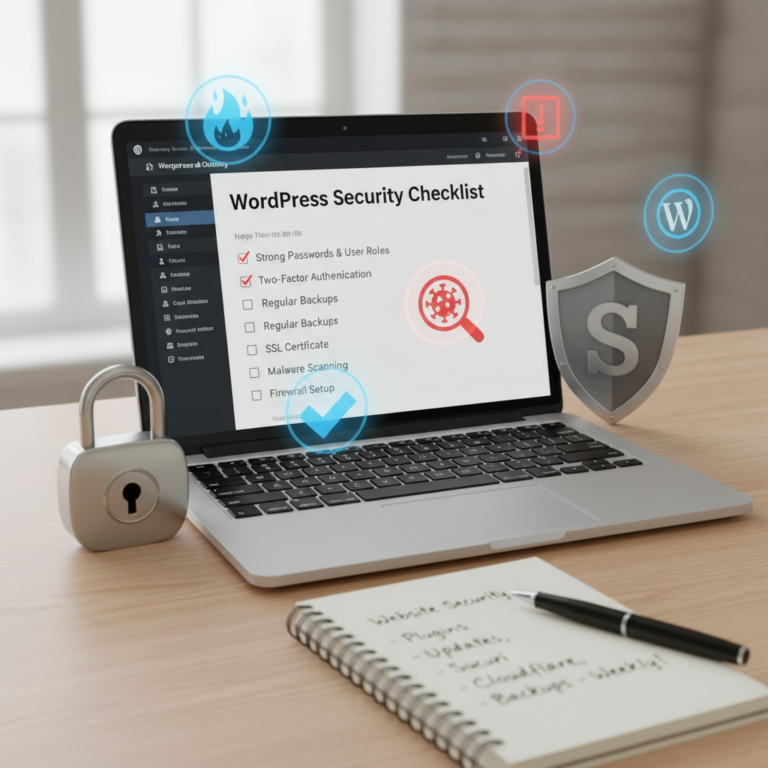
Security is not about having a supercomputer; it is about common sense. Keep your software, themes, and plugins updated. Developers release these updates to patch holes that hackers use to break in. If you ignore those update buttons, you are leaving your front door unlocked.
Speed matters more than you think. A slow site kills your traffic. Compress your images before you upload them. Use a simple caching plugin to make your site snappier. These small habits keep your site healthy for years to come.
Troubleshooting Common WordPress Errors
Talking Points:
- Fixing the White Screen of Death.
- How to disable a rogue plugin.
- When to ask your host for help.
That 2am crash I mentioned earlier? Usually, that is a PHP error. If you get a white screen, your first move should be to rename your plugins folder via FTP. This forces WordPress to turn everything off. Once you are back in, reactivate them one by one to find the culprit.
Most errors are just software conflicts. Don’t let them intimidate you. If you get truly stuck, your hosting support team is there to help. They deal with these issues every single day. You will learn the ropes faster than you think.
Downloadable PDF: Your Portable WordPress Cheat Sheet
Talking Points:
- Getting our free wordpress ebook download.
- How to use the guide during site setups.
- Keeping your notes organized for later.
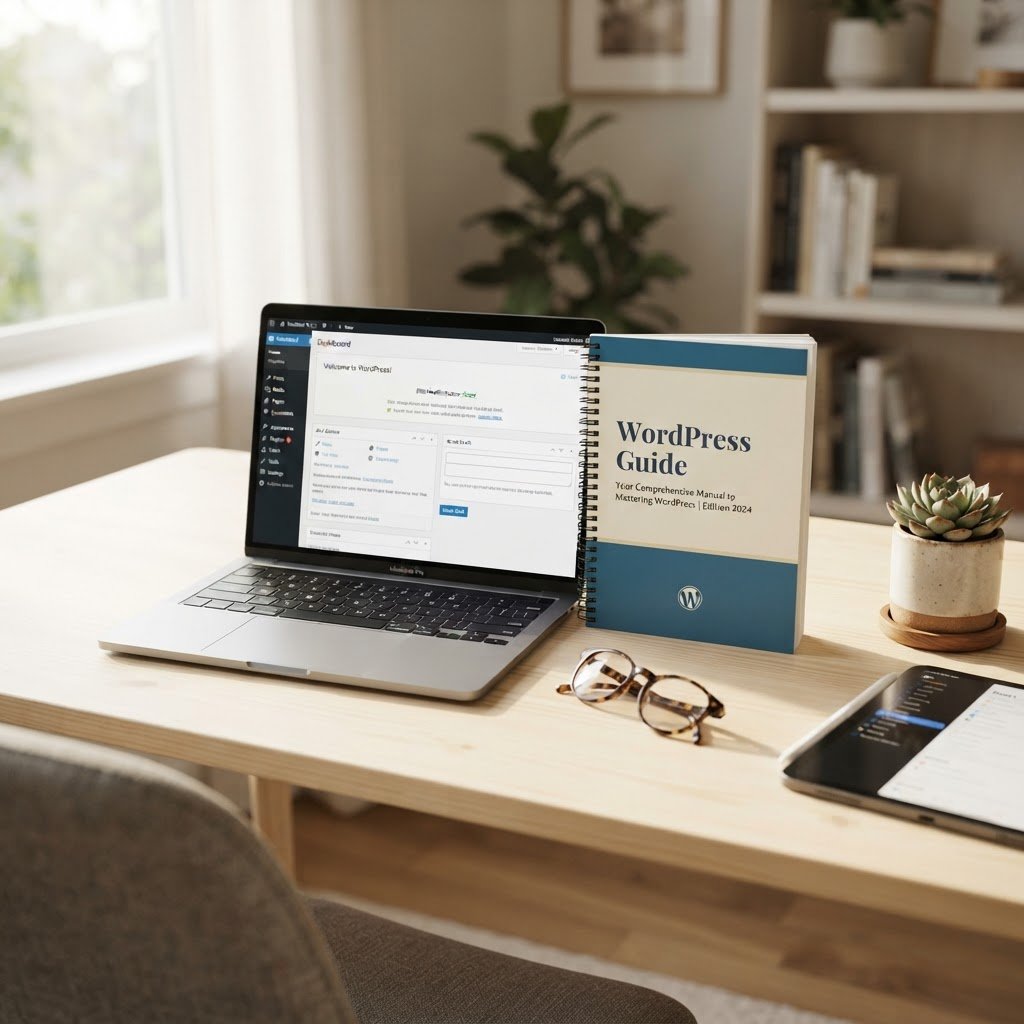
I have put everything I know into a printable format for you. This wordpress basics for beginners cheat sheet will save you time. You can keep it on your desk while you work. No more scrolling back and forth through long articles just to find one setting.
This free wordpress ebook download is your map. It covers the checklist you need to follow every time you start a new project. Grab your copy now and keep it handy. Having a physical reference guide makes the setup process much less stressful.
Conclusion: You Now Have the Power to Master WordPress
Learning this platform is one of the best investments you can make for your online career. You started with a blank screen and now you have a working site. It might seem like a lot to take in at first. Take it one day at a time. The more you use these tools, the more intuitive they become. You have the guide, the steps, and the knowledge to succeed. Go ahead and start building your own space. Share your success or ask your questions in the comments below. Let us get your site running perfect today.
Frequently Asked Questions
1. Question: Is it hard to learn wordpress for beginners?
Answer: It is similar to learning a new phone interface. You just need to explore the dashboard for a few hours to gain confidence.
2. Question: Can I break my site if I change a setting?
Answer: Rarely, but always keep a backup. Most settings can be switched back instantly if something goes wrong.
3. Question: Do I need to pay for premium plugins?
Answer: Not at the start. The free versions of most plugins are more than enough to run a professional site effectively.
4. Question: How often should I check my site for updates?
Answer: Make it a weekly habit. It keeps your site secure and ensures all your features continue to work as intended.
5. Question: Can I change my theme later without losing my content?
Answer: Yes, your posts and pages are saved in the database, so your theme change only impacts the visual design, not your actual writing.