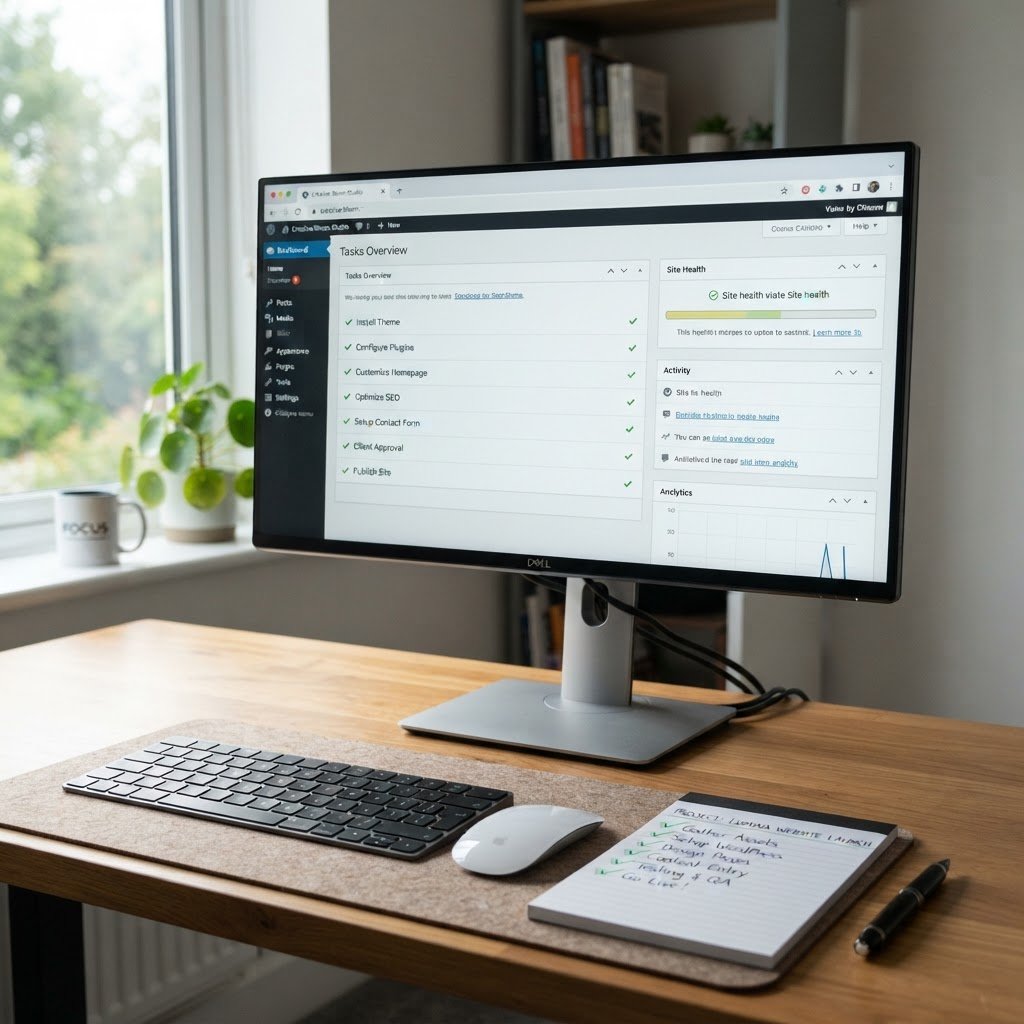
WordPress Maintenance Services Checklist: Keep Site Secure
The Ultimate WordPress Maintenance Services Checklist: Keep Your Site Fast & Secure
Talking Points:
* The hidden cost of ignoring site health.
* Why 2am site crashes happen.
* Reframing maintenance as insurance.
I remember getting a frantic call at 3am from a client whose site had simply vanished. It was replaced by a white screen and a single, terrifying line of text. That is the reality when you ignore your site’s health. WordPress powers over 43% of all websites, which makes it a high-value target for automated bots searching for weaknesses.
You might think your site is too small to notice, but the math says otherwise. Nearly 13,000 WordPress sites are compromised every single day. That is nearly 4.7 million incidents every year. Maintenance is not just about keeping things running smooth. It is your primary business insurance against total loss.
If you treat your site like a set-and-forget project, you are waiting for a disaster. Taking control today prevents that midnight panic. It keeps your visitors happy and your business safe from digital break-ins.
Daily Must-Dos: Automated Backups and Uptime Monitoring
Talking Points:
* Why manual backups fail you.
* Tracking site availability.
* Proactive vs reactive fixes.
You should never rely on your host to keep your backups safe. Always maintain off-site cloud backups that run automatically each day. If your site gets hacked, you need a clean version ready to roll at a moment’s notice.
Automated uptime monitoring is the next layer of protection. This sends a signal to your phone the second your site goes offline. You do not want to find out your shop is closed from an angry customer email.
Get ahead of the problem. If you see the server struggling, you can react before the site drops. Being proactive saves your reputation every time.
Weekly Maintenance: Updating Core, Plugins, and Themes Safely
Talking Points:
* Managing plugin compatibility testing.
* Addressing plugin vulnerabilities.
* The speed of modern threats.
New WordPress ecosystem vulnerabilities hit thousands of times a year. In fact, 96% of pros reported a security incident in 2025 alone. That is a massive number.
Most threats enter through third-party themes or plugins, not the core software. You have to update these items weekly. Do not just hit the “Update All” button blindly, though. Run plugin compatibility testing first to make sure your layout does not break.
Automated attacks often start within five hours of a public security disclosure. Weekly updates keep your window of exposure small. It is just basic hygiene for your digital property.
Monthly Performance Checks: Speed, Database Health, and Broken Links
Talking Points:
* Core web vitals monitoring.
* Cleaning up your database.
* Managing user experience.
A slow site kills conversions. Every month, run a check on your site speed to ensure core web vitals monitoring shows green lights. If things lag, database optimization can often shave seconds off your load time.
Broken link resolution is another task you cannot skip. Dead links frustrate users and signal to search engines that your site is abandoned. Spend an hour each month hunting these down.
Keep your house clean. Spam comment removal also helps keep your database lean. A streamlined, fast site is a profitable site.
Quarterly Security Audits: Hardening Your Admin Panel
Talking Points:
* Limiting login attempts.
* Performing an admin access audit.
* The danger of weak passwords.
Basic firewalls are often not enough to stop modern attacks. Nearly 88% of WordPress exploits can slip right past standard server defenses. You need to harden your admin area directly.
Perform an admin access audit quarterly. Remove old user accounts that no longer need access. Change every password to something complex and unique.
Check for any unauthorized accounts lurking in the shadows. Security is layers, not a single plugin install. Don’t leave your front door unlocked.
Yearly Deep Dives: Content Refreshes and SEO Housekeeping
Talking Points:
* Reviewing your top-performing posts.
* Updating outdated information.
* Auditing your site architecture.
Once a year, look at your content with fresh eyes. Is your information still accurate? Update old posts with new statistics or better advice to keep them ranking.
Check your SEO metrics to see what is working. Maybe your landing page needs a fresh call to action. Take the time to prune or improve content that isn’t pulling its weight.
Your site is a living thing. A yearly audit keeps it relevant and healthy for your visitors. It is hard work, but it pays off in traffic.
Staging Environments: The Secret to No-Stress Updates
Talking Points:
* Building a sandbox environment.
* Testing updates before live.
* Avoiding site-wide breakage.
A WordPress staging environment is a mirror of your live site. It is the perfect place to break things without consequence. Never run updates on your live site without checking them here first.
If a theme update ruins your menu, you fix it in staging. Your customers never see the mess. It is the ultimate tool for keeping your sanity intact.
Every professional uses this workflow. It turns a stressful update session into a simple, predictable task. Use it and you will never fear the update button again.
DIY vs. Pro: When to Hire a WordPress Maintenance Service
Talking Points:
* Assessing your time value.
* Handling complex technical issues.
* Peace of mind vs cost.
Some folks love tinkering with code. Others have a business to run and no time to play developer. If maintenance tasks take you away from your actual work, consider professional WordPress support services.
Managed care means you don’t worry about SSL certificate management or PHP version compatibility. Experts handle the backend while you focus on growth.
Think about what your time is worth. Sometimes paying for help is the most profitable business decision you can make.
Choosing the Right Support Partner: What to Look For
Talking Points:
* Checking for proactive communication.
* Verifying restore procedures.
* Asking about malware scanning.
Don’t just pick the cheapest option. Ask if they offer malware vulnerability scanning. You want a partner who looks for trouble before it finds you.
Check their reputation for quick support. When your site is down, you need someone on the line immediately. Avoid services that take days to reply.
A good partner becomes an extension of your team. They protect your revenue and keep your site running fast. Pick someone who understands your goals.
Conclusion: Peace of Mind for Your Digital Business
Maintenance is not a chore. It is the foundation of your online business. When your site runs fast and stays secure, you are free to build, create, and grow without distraction.
Take these steps one at a time. Whether you manage it yourself or hire a pro, start today. Your future self will thank you when your site remains up while others crash. Got a maintenance tip that saved your bacon? Share it in the comments below!
Frequently Asked Questions
1. How often should I check for malware? You should have automated malware vulnerability scanning running 24/7, but a manual deep check once a month is a smart habit.
2. Do I really need a staging site for small updates? Yes. Even a tiny CSS change can have unexpected effects across different browsers; testing in staging prevents those surprises.
3. Why are my plugins the biggest security risk? Plugins often have custom code that isn’t as strictly audited as WordPress core, creating more “doors” for attackers to exploit.
4. What is the biggest mistake in site maintenance? Thinking that a security plugin makes you safe forever; you still need to update your software and perform regular audits.
5. Can I perform database optimization manually? You can, but it is safer to use a trusted plugin or have a developer do it to ensure you don’t accidentally delete important tables.